Gas Leak Repairs in Ningi
Smelling gas comes first, and the repair comes second. Gas leak repair in Ningi is licensed work that begins once the safety steps are done, and each job belongs to a licensed plumber holding a gasfitting licence. The visit ends with the system retested before the supply returns.
If we're late, $100 comes off your bill

- Licensed and InsuredEvery job done by a licensed plumber. QBCC No: 15024607
- Fixed Quote FirstFlat-rate pricing, agreed before any work starts
- Lifetime Labour WarrantyBacked by our Fix-It-or-It's-Free guarantee (T&Cs apply)
- $0 Call-Out FeesNo extra charge for nights, weekends or public holidays
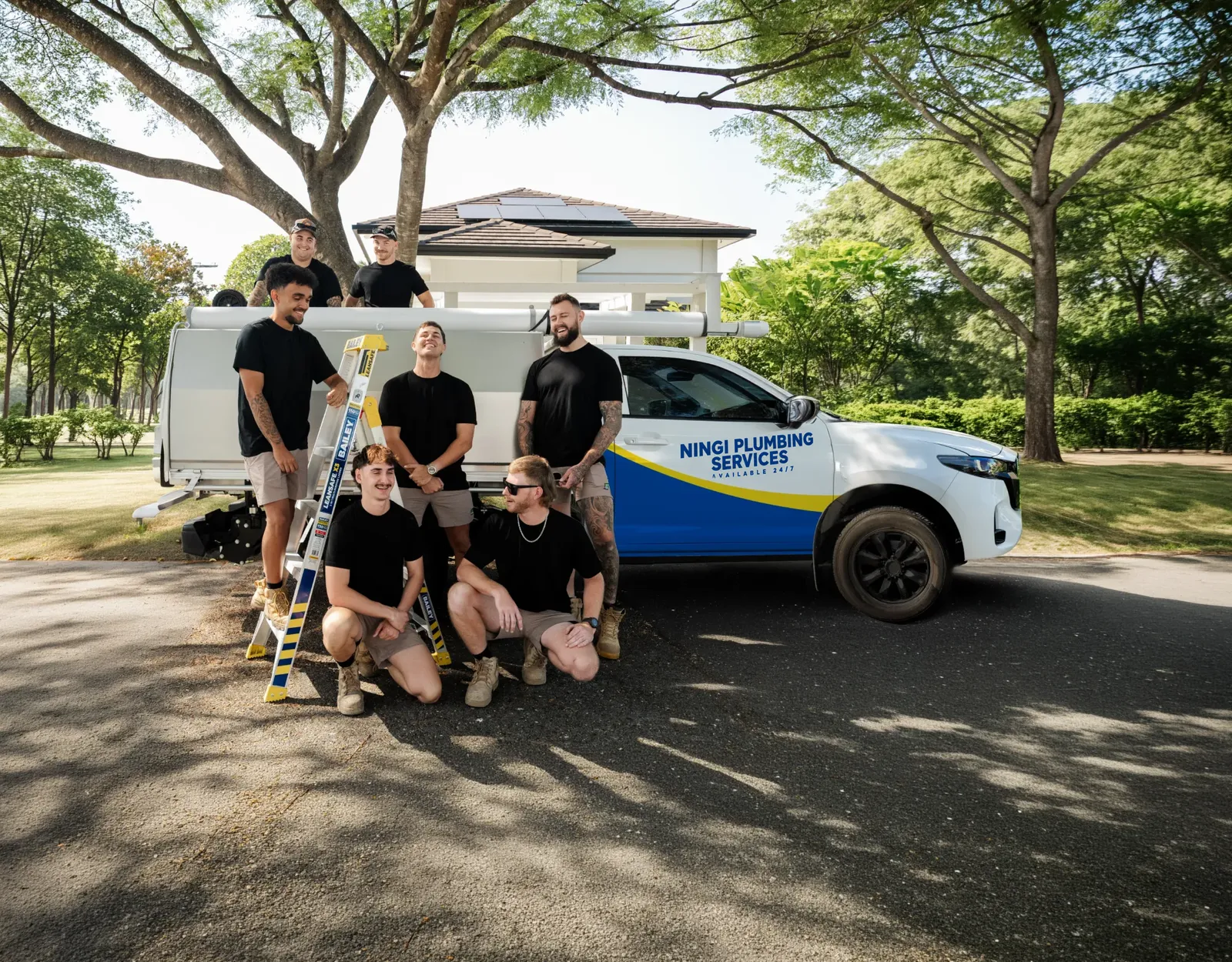
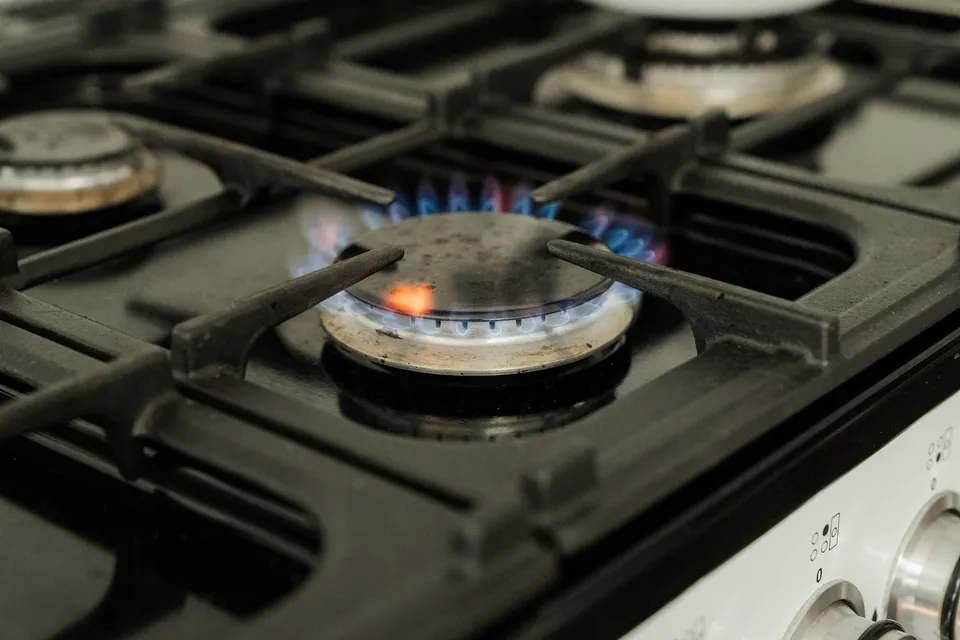
If the smell is there right now, act before reading on. Turn off the appliance, let fresh air through the doors and windows, and keep away from switches. If the smell stays, close the valve at the meter or cylinder, then ring for help.
What follows covers the next stage: tracking down the leak, the repair options by scale, and the paperwork that may trail the job. Fuel gas in a closed space is highly flammable, and a room filling with gas displaces oxygen, bringing nausea, dizziness and, at worst, asphyxiation. So the finding and the fixing belong to a licensee from start to finish. For the wider licence rules around gas work, see our gas fitting page.
How a Gas Fitter Finds the Leak
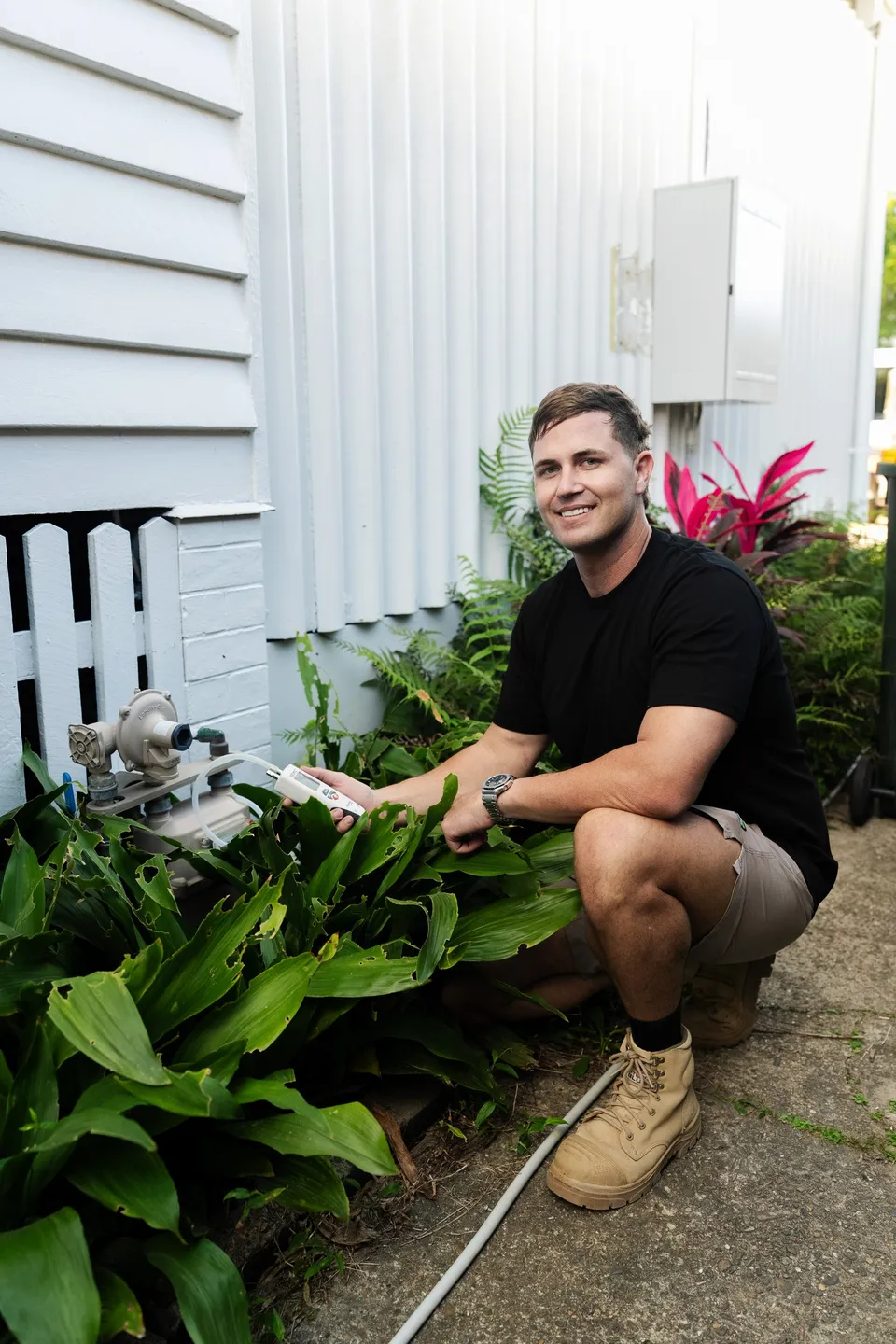
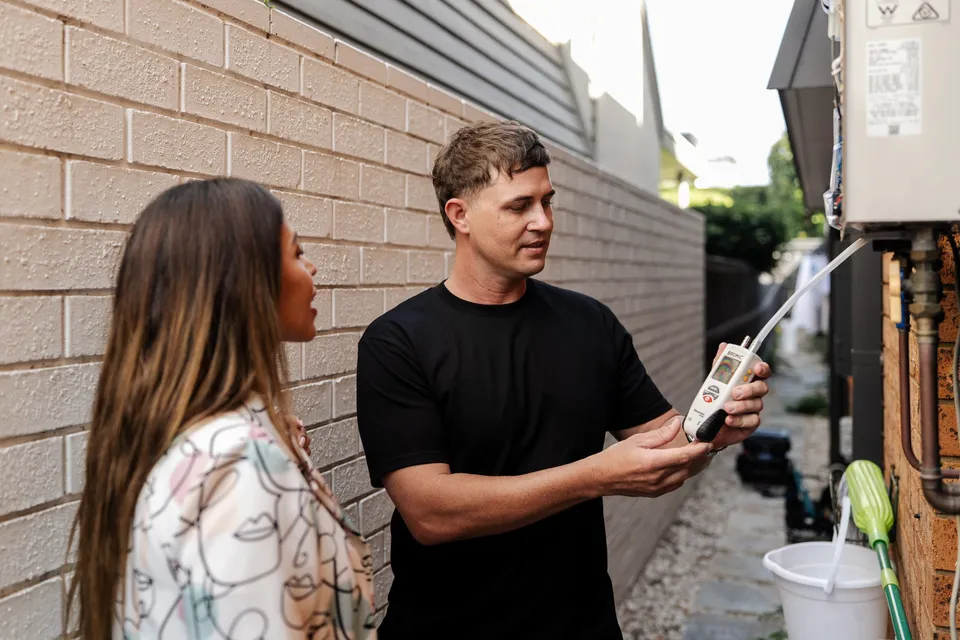
The gasfitter closes the supply, divides the pipework into sections and pressure-tests each one. A section that loses pressure holds the leak, and a detergent mix brushed over its fittings bubbles at the exact point.
The sequence in plain terms:
Isolate
Closing valves separates the system into stretches that can be tested one at a time.
Pressure-test
Each stretch gets checked for pressure loss, which narrows the leak to one section.
Bubble-check
A detergent-and-water mix goes on the fittings in that section, and bubbling marks the leak.
Retest
After the repair, the whole system is tested again before use.
The Queensland Government gives householders one check of their own. With the gas on, lightly spray soapy water over the meter or cylinder fittings, the connection pipes or regulator hose, and the connection point, watching for bubbles. Froth means a leak, so contact a licensed gasfitter about anything that bubbles.
Replace a Fitting, a Section or the Run
A licensed gasfitter carries out the repair and picks from three options by scale. The smallest is swapping a worn fitting or a faulty regulator. The middle option replaces a stretch of pipe you can reach, and the largest runs new pipe around a stretch you cannot.
Each option suits a different fault:
A fitting or regulator swap
handles the common case, where one connection has worn out and the rest of the line is sound.
An accessible section replacement
suits a stretch with several tired joints, provided the route is open enough to work along.
A new run around an inaccessible stretch
costs more, but it is the right call where old pipe sits inside a wall or under a slab.
A straight swap of one fitting is quick work; a rerouted line is a bigger job. Either way, you get a fixed quote before any work starts, with flat-rate pricing and no hidden fees.
Leak Points Inside, Outside and Underground
Working from the supply inward, the usual failure spots are the meter or cylinder fittings, the regulator and hose, the pipe joints, and the final connection into the appliance. Most leaks sit at the joins rather than in the pipe walls, so working that order saves time.
What each point fails at:
Meter or cylinder fittings
outdoor brass and copper that copes with weather year after year.
Regulator and hose
flexible parts that age faster than rigid pipe.
Pipe joints
every bend and join is a potential weak spot, especially in older runs.
The appliance connection
the last join before the unit, disturbed by any past move or service.
Corrosion, deterioration and damage across the system and its appliances are what a safety check looks for. The gas type matters too. Natural gas is lighter than air, so escaping gas drifts upward and disperses outdoors, while LPG sinks and can settle in low spots and drains.
Defect Notices and Compliance Certificates
Two documents can trail the job, each with its own trigger. A defect notice covers any safety concern the gasfitter cannot fix on the spot. A compliance certificate follows work that installs or alters the gas system.
The rules in short:
Defect notice
the gasfitter has to give the owner or operator one for any safety concern found during the work, unless it is fixed immediately by doing the gas work.
Imminent risk
where harm looms, the gasfitter secures the system first, then contacts the network operator and the state's gas inspectorate.
Compliance certificate
issued straight away on completing an installation or alteration, certifying that the work complies.
Retest
whatever the paperwork, the system is retested before it runs again.
A repair that only swaps one fitting may not count as an alteration, so it may carry no certificate at all. If you are planning new gas work as well, our gas cooktop installation page sets out what an appliance fit-out involves, and gas bayonet installation covers the outdoor points for barbecues and heaters.
Where Ningi Homes Meet Gas Leaks
The locality has grown fast, and the newer the home, the shorter its gas history. Area-level figures put population growth at 7.9 percent over the five years to 2025. Another 146 dwellings were approved in 2021-22 alone, so many houses near the Sandstone Lakes Early Learning Centre carry gas lines only a few years old.
Newer joins are not immune, because a fitting disturbed during a renovation or an appliance swap is a common starting point. Older blocks tell a different story. The 1980s-2000s housing era left long pipe runs on half-acre and acreage blocks, and a leak out along one of those runs takes more isolating to pin down. That is the access factor that shapes the fixed quote: distance and reach, not just the failed part.
How a Gas Leak Repair Visit Runs
- 1

Tell us what's happening
Call (07) 3524 0766 or send the form with a few details about the problem in Ningi. A clear description helps us bring the right parts.
- 2

We trace and quote the repair
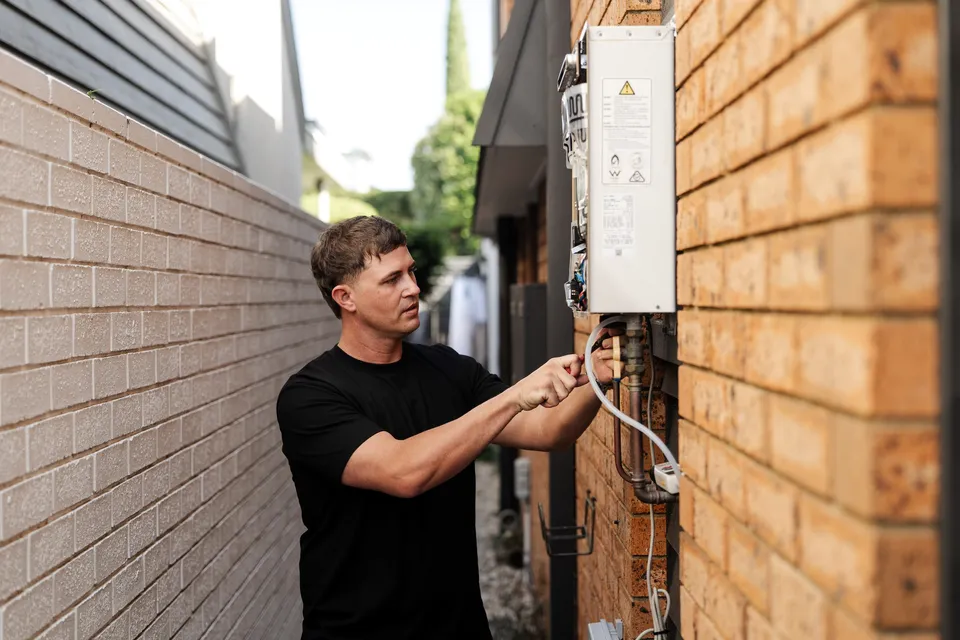
The visit starts with the supply shut off and the system split into testable sections. The pressure results plus the detergent check narrow the leak to its exact joint, and you then see the fixed quote for the fitting, section or reroute that suits the fault, retest included.
- 3
Approve a fixed price
You get a fixed quote before any work starts, with flat-rate pricing and no hidden fees. Nothing goes ahead until you say yes.
- 4

Pay when it's finished
Pay by card or EFTPOS on site once the job's done, or ask about Fix now, pay later.
Plumbing job in Ningi?
$0 call-out fees, available 24/7, and same-day where we can.
Gas Leak Questions From Ningi Homes
Call (07) 3524 0766Are gas leak repairs free, and what changes the price?
No, repairs are not free. A licensed gasfitter prices the job by fixed quote with flat-rate pricing, and the drivers are where the leak sits, how hard it is to reach, the parts needed and the retest afterwards.
Where do gas leaks usually start in a Ningi home?
The fittings at the meter or the cylinder come first, then the regulator and its hose, the joints along the pipe run and the final connection into the appliance. Corroded or damaged parts are the usual culprits, and a safety check covers all of them.
Is a gas leak an emergency repair in a Queensland rental?
Yes, a gas leak sits on the emergency repair list for Queensland rentals. A tenant reports it straight away, and the owner or property manager arranges urgent work by a licensed gasfitter.
Can I repair a gas leak myself in Ningi?
No, repairing and testing a gas system are both gas work, reserved for a licensed gasfitter. Never repair or remove a cylinder valve yourself, and leave every fitting on the line to the licensee.
What should I do about gas after a storm or flood?
Call 000 straight away if you can smell gas. If a meter, regulator or cylinder looks damaged, contact the gas supplier, whose emergency number sits on your bill, then have a licensed gasfitter check the system before it runs again.

Ring Us About the LeakWe'll call you back.
Book on (07) 3524 0766 for plumbing anywhere in Ningi. We're available 24/7, there's no extra charge for nights, weekends or public holidays, and every job comes with $0 call-out fees.
To claim your $0 call-out fee, call (07) 3524 0766 today.